
Hard Rain Falling

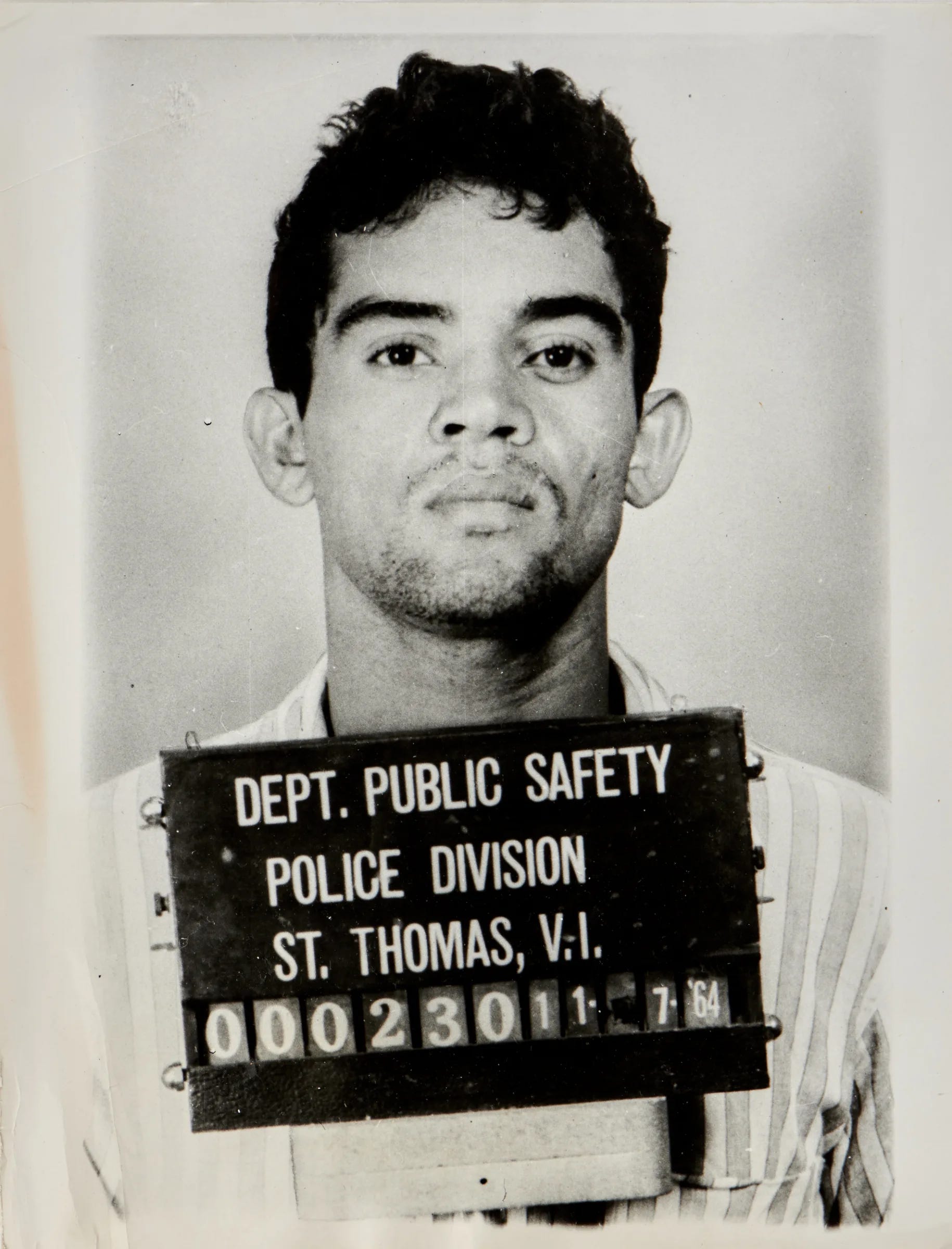
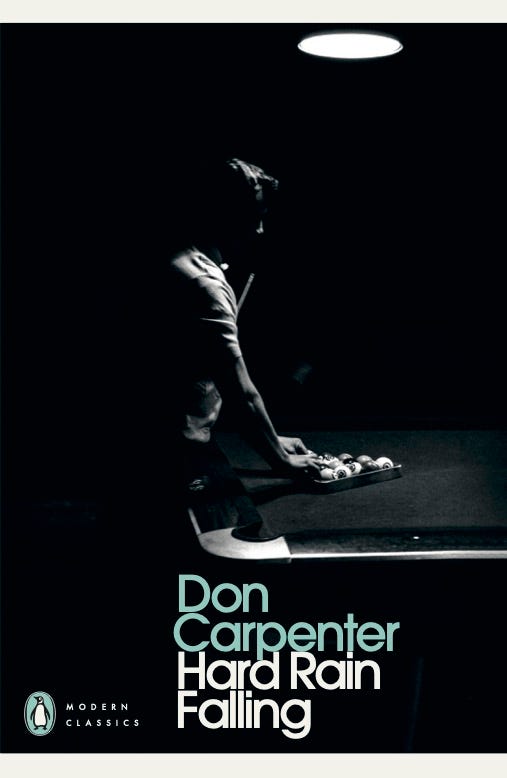
I was in a Berlin bookshop recently and noticed a brand spanking new Penguin Modern Classics edition of Don Carpenter’s 1966 novel Hard Rain Falling. I don’t know who is overseeing the cover design on some of the Penguin Modern Classics releases, but they need a raise, because they’re work is stunning, including on the new edition of Carpenter’s book.
Catching the new Hard Rain Falling edition in the wild, made me realise what a long way we’ve come from being able to say, as we once could, that Carpenter’s novel was one of the best least known American crime fiction debuts of the late sixties. Indeed, this hasn’t really been the case since at least 2009, when New York Review of Books released it as part of its classics series, with a forward by no less a crime fiction eminence than George Pelecanos, who stated the book “might be the most unheralded important American novel of the 1960s.”
Since then, Hard Rain Falling and Carpenter’s work more generally has undergone a wider critical re-appraisal.
It was a very different situation in 1995, when the then sixty-four-year-old author, beset by financial woes and facing multiple health problems, committed suicide. One of nine novels Carpenter wrote, Hard Rain Falling was lauded by critics and other writers upon its release, leading to the well worn description of Carpenter as a writer’s writer, but the book never reached a mainstream audience.
There is some debate as to whether Hard Rain Falling is a crime novel. I’ll let others argue over the fine grain literary questions. The book is about crime, criminals and prison. That’s enough for me. It opens in eastern Oregon in 1923, with a liaison between a cowboy and a 16-year-old female runaway. She quickly gets pregnant, is sent to a home for unwed mothers, then goes to live on an Indian reservation, where she eventually commits suicide. The cowboy works as a farmhand, drifts into alcoholism and is eventually killed in an accident.
Their abandoned son, Jack, the main character of the novel, grows up in an orphanage, eventually escapes and comes to Portland, where he runs with a loose gang of wild teens, including the de-facto leader, Denny Mellon, and a talented black pool hustler, Billy Lancing.
After breaking into and vandalising a home whose occupants are away on vacation, Jack is arrested sent to reform school. His time there includes a hellish stint in solitary confinement, vividly conveyed:
They did not feed him every day, and because of that he had no way of knowing how much time had passed. After a while time ceased to exist. Time stopped in a strange way. First he was aware that there was no present, no such thing as a moment; there was only the movement of his thoughts from past to future, from what had happened to what would happen.
This is followed by a stint in a state mental institution. Upon his release, Jack boxes semi-professionally, does more jail time and drifts to San Francisco where he reconnects with Mellon, now a full blown alcoholic. The two men hook-up with a couple of young female runaways and it is not long before Jack again falls foul of the law, this time ending up in San Quentin. There he becomes a cellmate and, eventually, a reluctant lover with Lancing, also doing a stint in prison. The tragic fate of this relationship marks Jack so profoundly, that upon his release he embarks on an attempt to go straight.
The enormous success of Irving Shulman’s 1947 novel, The Amboy Dukes, made the experience and rituals of juvenile rebellion a staple of pulp fiction and more than a few crime novels. Hard Rain Falling contains most of the key tropes shared by these books: meaningless violence; promiscuous, exploitative sex; the intervention of various adult authority figures, well meaning and not so well meaning; the inevitable trajectory from petty to more serious crime and hard jail time.
What elevates Hard Rain Falling well above the pack of similarly themed stories is the quality of the writing - the prose is clean and sharp - and Carpenter’s storytelling ability. The tone of the novel is unsentimental and matter of fact. It plunges us into the harsh, unsparing reality of Jack’s world, but also conveys the strong emotional connection between the characters.
Carpenter’s treatment of homosexuality in prison is a case in point, conveying emotion without the sensationalism that often accompanies writing on this subject.
One day while Jack was walking past the salad table with a stack of hot clipper racks, he happened to glance over in time to see one man slip a plastic ring on the finger of another man. Both were ordinary men, one a burglar and the other a thief, but the expressions on their faces were ones Jack could never remember having seen on a man: one of them shy and coy, an outrageous burlesque of maiden modesty; the other simpering with equally feminine aggressiveness.
Little more than a child when we first encounter him, Jack drifts through a harsh post-war landscape of pool halls, flop houses and greasy spoon cafes, with only his wits and skills as a fighter to rely on. He is a rebel with a keen sense that he is on the losing side of society’s power relationships.
Shortly after he had quit working in eastern Oregon, he had gone all over with a partner pulling a short change racket that involved the changing of a twenty-dollar bill for a package of cigarettes; he imagined he had done this enough times to deserve at least a hundred years in prison if he got a year on each count, so he was not feeling particularly innocent, at least in the eyes of the law. As for the true crimes of his life, the crime of being born without parents, the crime of being physically strong and quick, the crime of not having a puritan conscious, the crime of existing in a society in which he and everybody else permitted crime without rising up in outrage: well, he was purely and perfectly guilty here, too, as was everybody else.
As Pelecanos put it in his forward to the New York Review of Books edition, ‘many debut novels boil and sometimes over boil with a voice edging towards manifesto, it’s rare to see one that hits the mark with the assuredness, maturity, and authority of Hard Rain Falling.’
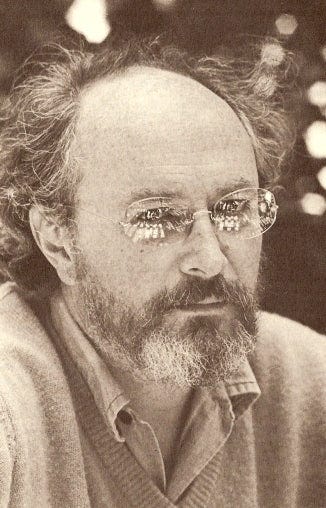
Carpenter was born and spent his early childhood in California, before his family moved to Portland. Unable to make a living purely from fiction, he also worked for Hollywood. He wrote the script for the largely unavailable 1973 film, Payday, which starred Rip Torn, about a manipulative country and western singer. He also wrote for television, including fascinating sounding show, The Outsider, which featured Darren McGavin (of Kolchak: Night Stalker fame), about an orphaned ex-con loner working as a private investigator in Los Angeles. Twenty-six episodes of The Outsider appeared over 1968-1969.
His Hollywood experience, the workings of which he described as “easily as complex, fascinating and mysterious as ancient Egypt”, became the basis of Friday at Enrico’s, unfinished at the time of his suicide but subsequently completed by novelist Jonathan Lethem and published in 2014, about a group of West Coast writers in the 1950s and 1960s as they navigate the world of Hollywood. The Hollywood Trilogy, a trio of three stories he wrote between 1975 and 1981, about working in Hollywood, was also published in 2014.
Severin Films release of Robert Fuest’s The Final Programme
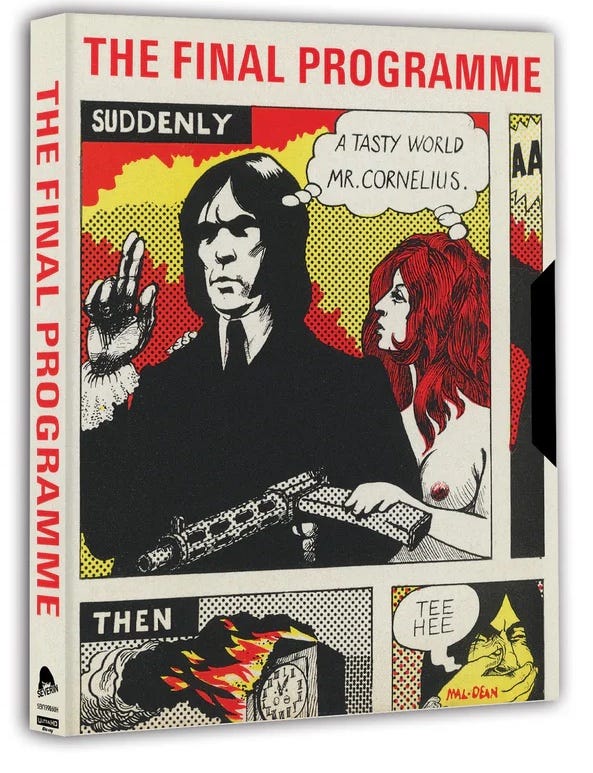
It was great to be able to contribute a commentary to Severin Films release of Robert Fuest‘s The Final Programme (1973). Although Britain was crucial to the new wave SF movement in the late 1960s/early 1970s, very few of these texts made it to the screen. This film was one of the exceptions. A much underrated effort in my opinion and the extras on this release are simply jaw dropping, including a new interview with the author of the film’s source novel, Michael Moorcock.
Projection Booth #774, Cop (1988)
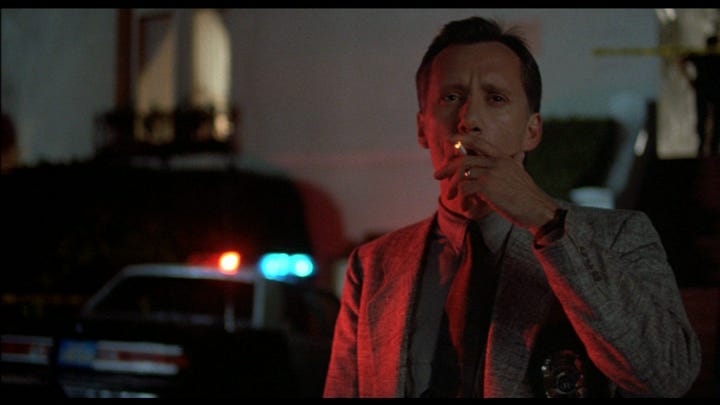
I guested on not one, but two episodes of the Projection Booth podcast in November. The first, which I wrote about in my last newsletter, was on German director Helmut Käutner’s 1961 razor sharp noir, Schwarzer Kies, or translated into English, Black Gravel.
The second provided me with the chance to talk about Cop one of my favourite 1980s neo noirs and what l maintain is the screen adaptation most faithful to the spirit & tone of James Ellroy’s work (and if you want to read more about my thinking on this, check out this post of mine from 2024).
It is a great episode, if I do say so myself, which includes new interview with director James B. Harris, who deserves more recognition for his fascinating career.
I will try and check back in with at least one more newsletter before I clock off for 2025. But if the end of year crush proves to much for me to crank out another missive, I just want to say thanks to everyone who has read and subscribed to this newsletter. A particularly big thanks to those who have a paid sub. I appreciate all of you.
Great post Andrew. You covered a few of my favorites as well. Juts a tip of the hat to James Woods. He was a very underrated actor, who made some very underrated movies, like Cop. My all-time favorite of his movies out of so many, was The Onion Field based on the novel by Wambaugh. Enjoyed reading this. - Jim
Yes! I recently saw that exact cover and it reminded me of the great covers that Vintage Crime/Black Lizard did for their Jim Thompson releases.
Great post!