

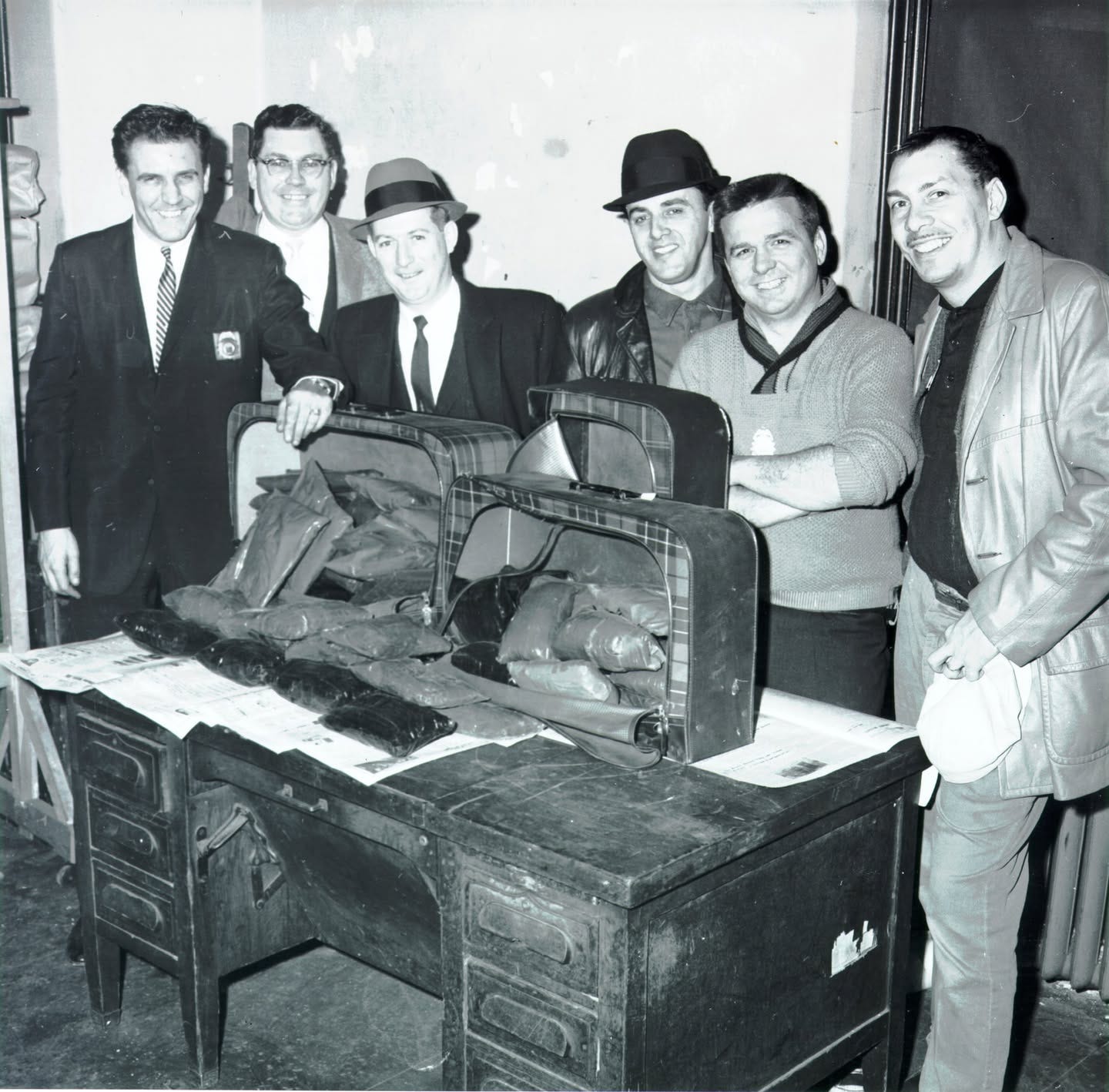
A recent post by someone I follow on social media alerted me to the fact that it’s the 55th anniversary of William Friedkin’s 1971 film, The French Connection. But rather than another post about how undeniably groundbreaking it was, I want to talk about another aspect of the film. The story of the real French Connection.
For several years in the mid-nineties I lived in Vientiane, the then crumbling, sun bleached capital of Laos. The country was just opening after decades of isolation following a nominally communist takeover in late 1975, the aftershock from the fall of Saigon and Phnom Penh several months earlier. Never formally part of America’s hostilities in Indochina, Laos was referred to as the Secret War, in which the Vietnamese backed Pathet Lao fought against the Central Intelligence Agency and its local proxies, supported from by the US air force which dropped so much ordinance, it left Laos the most country bombed in history.
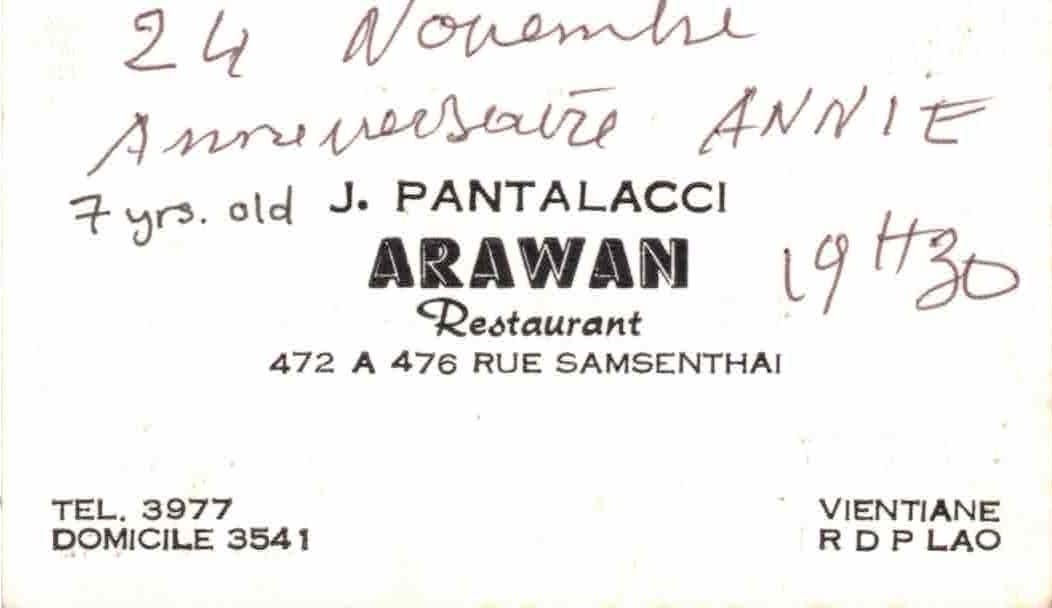
Laos still felt incredibly isolated and impoverished in the early 1990s. Vientiane had a small expatriate population, a select few of whom had arrived before the regime change and managed to stay on since. One of them was an old Corsican man by the name of Joseph Pantalacci, who owned a restaurant called Arawan, tucked away on a side street in the capital. I remember him as a portly man in his late seventies, always dressed in a white shirt and suspenders, with thick black rimmed glasses. He had a large house on the banks of the Mekong with its own private jetty. I remember the rumour around town at the time was that he was unable to leave Laos due to unspecified complications.
After I first wrote about Pantalacci several years ago for the US site CrimeReads, an Australian acquaintance living in Asia reached out and sent me a bibliographical sketch of Pantalacci’s life compiled by a French researcher specialising in Indochina, Jean-Michel Strobino. This gave me a few more specifics about Pantalacci’s life. He first arrived in Vietnam as part of the French army in 1937. He subsequently spent two years in Shanghai, China, defending the France’s concession from the threat of Japanese invasion. He returned to Saigon and was due to go back to France, but this plan was derailed by the outbreak of war between France and Germany and he remained in Indochina, which was controlled by the collaborationist Vichy regime. After the war, he worked in the timber trade in Vietnam for several years, then moved to Phnom Penh, where he met his future wife, a mixed race Vietnamese woman, and apparently set up the country’s first modern brickworks.
Strobino writes:
‘At this time, there were more and more Americans in Cambodia because Prince Norodom Sihanouk had just accepted the military aid offered by the United States to fight against the communist guerrillas which were spreading throughout the region. Sensing the opportunity, Joseph Pantalacci and his wife decided to open a bar, The Cave, then a restaurant, The Golden Dragon, right in the center of Phnom Penh. These two establishments will very quickly experience enormous success, especially thanks to the American clientele who flock to the country, made up of diplomats and USAID officials, and especially soldiers.’
As the situation in Cambodia deteriorated, Pantalacci settled in Vientiane. He opened the Arawan, which become popular with the capital’s colourful war time expat crowd. After the Pathet Lao takeover in December 1975, he was allowed to stay by the authorities and even granted permanent residency. It is not clear how or why this happened. Indeed, I’d suggest there’s a lot left unsaid in this account of Pantallaci’s life.
Pantalacci was not the only enigmatic long-term Westerner in Vientiane. But a particular aura of mystery surrounded him. He was almost certainly the last remaining member in Indochina of a group of Corsican nationals who had come to Saigon with the French colonial forces in the 1930s and stayed.
The close-knit Corsicans, whose numbers in Indochina were swelled by those who stayed behind after the French defeat in North Vietnam in 1954, had the reputation for being deeply involved in the illegal opium trade, as well as prostitution and smuggling gold and illegal currency (I am not suggesting Pantallaci was involved in any of these activities). Alfred W. McCoy’s seminal 1972 book, The Politics of Heroin in Southeast Asia, which was required reading among expat circles in Vientiane, noted that before 1975 the Corsicans started small charter airlines, colloquially known as “Air Opium” for their involvement in the drug trade. They flew opium grown in Laos to drug laboratories in Saigon’s Chinatown, where it was refined into heroin and smuggled into Europe, the US and Canada.
Friedkin’s film tells the story of two New York City narcotics cops who follow a hunch through the bone chilling winter streets of Brooklyn, culminating in a multi-million-dollar heroin bust, it made a wunderkind of the director and provided break out roles for Gene Hackman as “Popeye” Doyle and Roy Scheider as Buddy “Cloudy” Russo. They were helped by a strong supporting cast, including the Spanish actor Fernando Rey as the Marseille based heroin trafficker Charnier, nicknamed “Frog One,” and French born Marcel Bozzuffi as his ruthless enforcer, Nicoli.
Like most films, The French Connection drew what had come before it. The inspiration of Peter Yates’s Bullitt (1968) is particularly clear. Friedkin has also acknowledged the stylistic cues he took from Costas Gavras’s 1969 Greek political thriller, Z. Reaching back further, there are also the trace elements of the uncompromising, hard driving cops of film noir, Glenn Ford’s Dave Bannion in Fritz Lang’s The Big Heat (1953) being just one example.
But there was so much in The French Connection that was new and different; grittier, more uncompromising, in parts more realistic than so many previous Hollywood cop films. It remains one of the earliest and most visceral examples of the body of 1970s American cinema in which New York was depicted as a city on the brink of complete chaos. On my most recent re-watch I was particularly struck by film’s sense of constant movement. Complemented by the Don Ellis jazz score, this involves not just the still jaw-droppingly good extended sequence when Doyle chases Nicoli, but the rolling stakeouts, the foot chases, the 24/7 sense of criminals and cops moving around New York on their business.
The script by Ernest Tidyman, whose fictional creation, black New York detective John Shaft, had hit America cinemas a few months earlier, was an amped up version of a 1969 non-fiction book by Robin Moore. Moore’s book told of a 1962 case in which two NYPD detectives, Eddie Egan and Sonny Grosso, tailed a low-level Mafia operative, leading them to what was at the time the biggest drug bust in US history, 64 pounds of pure heroin hidden in a Buick Invicta imported by a visiting French actor, Jacques Angelvin. Off the force by 1971, Egan and Grosso were technical advisors on Friedkin’s film, one reason for its air of realism. They also appeared onscreen. Egan was Doyle and Russo’s long-suffering boss, and Grosso played another Narcotics cop. It was the start lengthy careers – Egan died in 1995 and Grosso in 2020 – as cops on the large and small screens for both men.
Charnier was based on the Corsican drug kingpin Jean Jehan, who convinced Angelvin to smuggle the heroin into America. Jehan’s underworld career began in the years after World War II, when Corsican mobsters made an alliance with American crime figures to rebuild the pre-war heroin trade, known as the French Connection, largely dismantled by the Nazis. The opium was mostly grown in Turkey, refined into heroin in Lebanon and then shipped to the southern French port of Marseille. By some accounts seed money for the operation was stolen from the French Vichy regime during the German occupation. Money and protection were also provided by the CIA and French intelligence in return for the Corsican’s help in eradicating communist influence on the Marseille waterfront. At one stage in the 1960s, this trafficking operation was responsible for feeding as much as 80 percent of America’s heroin habit.
Frog One vanishes at the end of The French Connection only to be dispatched by Doyle who has pursued him to Marseille, at the conclusion of John Frankenheimer’s underrated 1975 sequel, French Connection II. Jehan was never arrested for the New York bust nor any of his ongoing trafficking activities, and reportedly died peacefully of old age at his home in Corsica. Friedkin claimed Jehan’s activities in the French resistance during the war were enough to give him immunity from prosecution while he was alive. Whatever the case, infighting amongst the Corsicans, political pressure on Turkey as a supplier of opium, and improved cooperation between US and French law enforcement led to the breakup of the French Connection operation in the 1970s.
The heroin trade was changing, even as Freidkin’s film was wowing US audiences. The Golden Triangle, the 950,000 square kilometre stretch of territory bordering Laos, Thailand and the country that was then called Burma, had produced opium since the 1930s, particularly the mountainous, heavily forested areas of northern Laos. McCoy claims that from around 1971, heroin processing laboratories in Marseilles were switching from Turkish to Southeast Asian morphine base. He also details the CIA’s growing involvement from the late 1960s in encouraging ethnic Lao hill tribes to grow opium in return for their assistance in fighting communists. In addition to the Corsicans, there were also claims opium was transported to Saigon in planes owned by the CIA’s airline, Air America, which was deeply involved in facilitating the secret war in Laos.
McCoy even recounts the details of a 1971 gathering similar in style to the infamous organised crime conclave in the upstate New York town of Apalachin in 1957, when Corsican syndicate leaders from Marseilles, Saigon, Vietnam, Phnom Penh, and Vientiane met with representatives of the American Mafia at Saigon’s Continental Hotel. The Mafia, McCoy claims, had followed the expanded US troop presence in Vietnam in 1965. He writes:
“Like any group of intelligent investors, the Mafia is always looking for new financial ‘frontiers’ and when the Vietnam War began to heat up many of its more entrepreneurial young members were bankrolled by the organisation and left for Saigon. Attracted to Vietnam by lucrative construction and service contracts, the mafiosi concentrated on ordinary graft and kickbacks at first, but later branched out into narcotics smuggling as they built up their contacts in Hong Kong and Indochina.”
Unlike Strobino, I never had the courage to quiz Pantalacci about his background. Not that I suspect I would have got anything much out of him. Vientiane was a small place and paid not to pry if you valued your visa. I was especially cautious as I was filing articles illegally under an assumed named for the Bangkok English language press – no Western journalists were allowed to be officially based in the heavily controlled country. I also clearly remember the word from people familiar with the city’s deceptively efficient internal security system, whose operatives had been trained by the Vietnamese and East German Stasi, to be cautious in relation to inquiries about Pantalacci. You didn’t stay on in Laos as a Westerner after the revolution and for all the years since without powerful connections. If I’m honest, nor did I want to jeopardise my continued access to the best French steak tournedos in town at his restaurant.
But after I’d decamped Vientiane for Hanoi, a friend, Greg Torode, who worked for the South China Morning Post newspaper did interview him. In the article, Pantallaci claimed he had never had anything to do with Corsican crime groups. ‘“Some of them were wild men… crazy, too much wine and too much women. Me, I can’t even speak Corsican now,” he says, a diamond flashing from a big gold ring marked “JP”.’ There was never anything to directly tie Pantalacci to criminal activities and maybe he was just an old guy who wanted a quiet life. Torode wrote, ‘He sits night after night in his restaurant in Vientiane softy shuffling a deck of cards and joking with his Lao waitresses … “The whole town calls me Papa,” he says.’
Whatever secrets Pantallaci might have had went to the grave with him when he died in early 2001. His restaurant was closed and has since been demolished.
This is an edited version of a post that originally appeared on the CrimeReads site in 2025.
Blowing my own trumpet
I have been commissioned to work on a few blu-ray releases over the last 12 months and, of course, and they have publicly announced at around the same time.
First up, the 25th anniversary 4K edition of Christopher Nolan’s Memento is finally available for pre-order from Umbrella Entertainment is finally out in the world and available for pre-orders here. This one is absolutely crammed with features, including a booklet essay by me on memory noir on the screen.
I really rate J. Lee Thompson’s revisionist 1958 British war film, Ice Cold In Alex, so was happy to have written the booklet essay for the new Vinegar Syndrome edition of it. The release includes lovely cover artwork by the late snd much missed Tony Stella. You can pre-order it on the Vinegar Syndrome site.

Every since the release of the book I co-edited, Girl Gangs, Biker Boys and Real Cool Cats: Pulp Fiction and Youth Culture, 1950-1980, I have been somewhat typecast in many of the blu-ray commissions I get offered - 1950s and 1960s films about juvenile delinquency. Not that I am complaining, especially when it leads me to working on cool things like Swedish label Klubb Super 8’s release of Farlig Frihet aka The Vicious Breed. Swedish director Arne Ragneborn’s controversial, stylish and very noirish 1954 youth gone wild film is definitely a cut above similar product that appeared in the US and UK around the same time. This release, which you can pre-order here, includes my video essay on the backlash against 1950s youth culture in the east and west.
Two other quick things.
I appeared on Berlin-based critic and programmer Elinor Lewy’s Somebody’s Watching podcast. We talked about the book I co-edited, Revolution in 35mm: Political Violence and Resistance in Cinema from the Arthouse to the Grindhouse 1960-1990, my time living in South East Asia and one of my favourite tropes in cinema, Westerners in trouble: ‘Asia hands’, expatriates, gringos, drifters & fuck ups south of the global border.
You can listen to the podcast episode here.
Last but not least, is this excellent Letterboxd watchlist from Sight and Sound magazine, hard-to-see cinematic curiosities. It is culled from entries to the magazine’s Lost and Found column over the years and includes a number of titles that I wrote about: John MacKenzie’s Unman, Wittering and Zigo (1971), Jules Dassin’s Uptight (1968), and Christopher St John’s Top of the Heap (1972), amongst many other great films. How many have you seen?
Until next time.
Great info on the background of the movie - Thanks!
很棒。肢解電影與時代背景、文化、故事、人物際遇的深度關聯,娓娓道來,自成一體。